

In infrared sauna design, heater placement is just as important as the heater technology itself. Unlike traditional saunas, which heat the air around you, infrared light delivers radiant energy directly to the body. Because infrared heat radiates outward and is absorbed directly by the body, the positioning of each panel influences how effectively thermal energy is delivered.
Achieving even, consistent exposure requires careful engineering. Clearlight® has invested years in refining heater configuration to ensure comprehensive body coverage and a more balanced, efficient infrared experience.

Understanding heater placement helps explain why some infrared saunas feel deeply immersive and others feel uneven or surface level.
How Infrared Heat Works
Unlike conventional heat, infrared does not circulate through air before reaching you. It radiates outward from the source and is absorbed by surfaces directly in front of it.
Far infrared heat penetrates the skin and gently raises core body temperature. Research suggests that many of the reported benefits of infrared therapy, including circulation support and muscle relaxation, are linked to this increase in internal thermal energy.
For this process to occur efficiently, the body must absorb infrared wavelengths consistently across large surface areas.
If heat is delivered from only one direction, the body warms unevenly. The side facing the panel may feel hot, while the opposite side remains cooler. This limits the rise in core temperature and reduces overall efficiency.
Infrared therapy is most effective when the body is surrounded by radiant heat rather than exposed from a single point.
The Importance of Front and Back Coverage
One of the keys to effective infrared therapy is simultaneous exposure of both the anterior and posterior of the body.

Heating the back alone will create warmth, but it does not produce the same balanced thermal response as heating both the front and back at the same time. When both sides of the body core receive infrared energy, core temperature rises more evenly and efficiently.
This has several practical implications:
- More consistent thermal response
- Reduced localised hot spots
- Greater comfort during longer sessions
- More efficient warming of large muscle groups
- Improved overall infrared exposure
Increasing the thermal energy within the body is central to encouraging a strong sweat response. If the front of the body is not adequately heated, overall thermal load may be lower than intended.
Many lower priced infrared saunas reduce the number or size of front facing heaters, often for aesthetic reasons. While this may simplify design, it can limit full body immersion.
Surrounding the Body with Radiant Energy
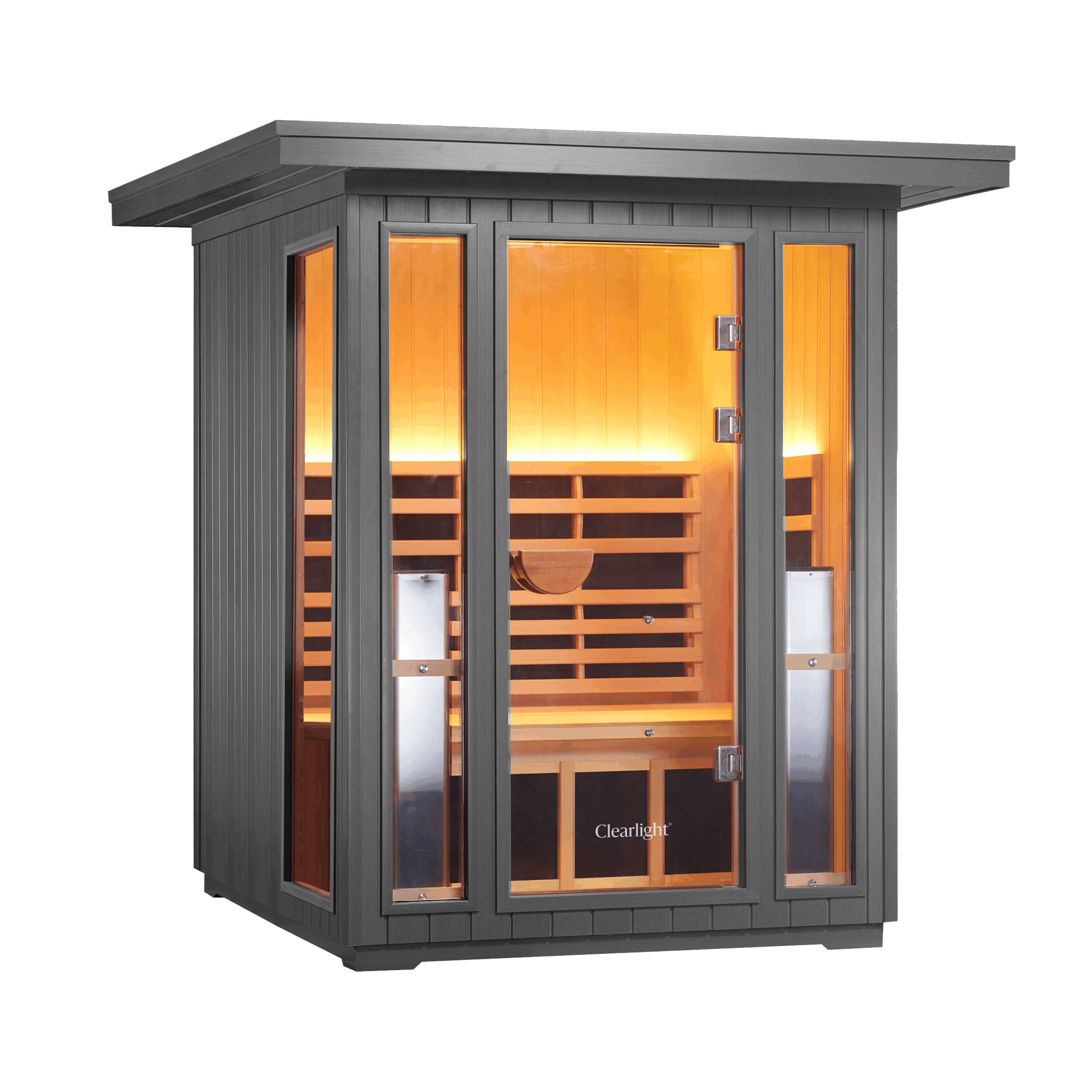
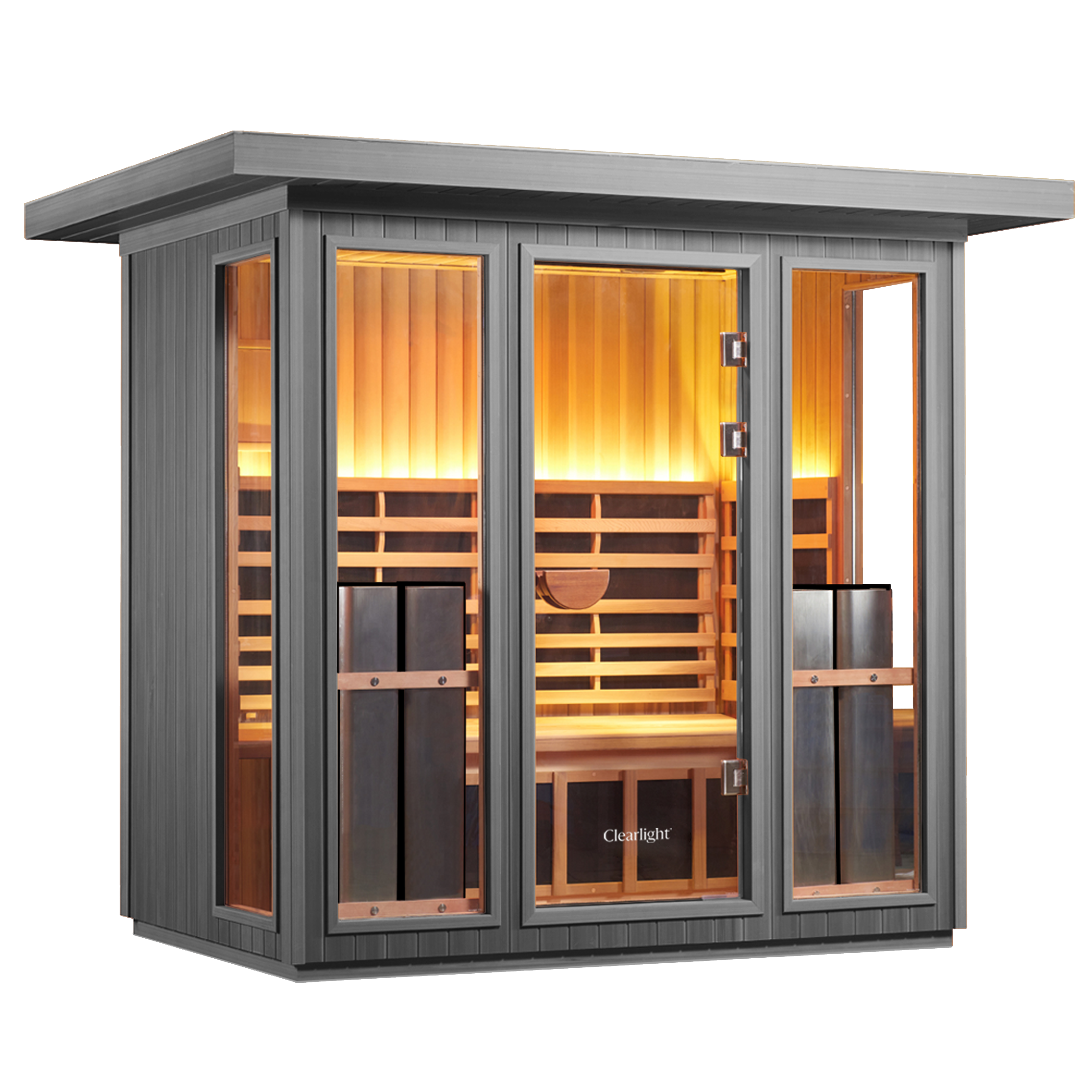
Clearlight® saunas are engineered to provide complete coverage of the body core. Heating panels are positioned on the front wall, back wall, side walls, beneath the bench and near the calves. This layout ensures simultaneous exposure across major muscle groups and key areas of circulation.
True Wave® heaters are designed with sufficient surface area to provide broad and even coverage rather than concentrated hot spots. Front heaters are positioned to target the front core, while rear panels cover the full back area.

By surrounding the body with radiant energy, the sauna environment becomes more immersive and thermally balanced.
Rather than relying on higher air temperatures to compensate for limited panel placement, the system focuses on direct and even infrared delivery.
Why Heater Placement Is Often Overlooked
Not all infrared saunas are built with the same engineering priorities. In some models, heater placement is secondary to interior aesthetics or manufacturing cost.
Reducing the number of panels or limiting front facing heaters lowers production expense, but it can compromise performance. Uneven placement may require higher temperatures to achieve similar perceived warmth, which can affect comfort.

When evaluating an infrared sauna, it is worth asking:
- Are heaters positioned on both the front and back walls?
- Is there side coverage for large muscle groups?
- Are lower body areas such as calves also exposed?
- Does the design surround the body or heat from behind only?
These structural considerations influence not just comfort, but efficiency and consistency over time.
The Relationship Between Placement and Performance
Effective infrared therapy depends on three interrelated factors:
- Wavelength optimisation
- Heater surface area and emissivity
- Strategic heater placement
True Wave® technology addresses wavelength and emissivity. Complete panel positioning ensures that this infrared energy is delivered evenly across the body.
When all three elements work together, the result is a more balanced sauna experience that feels immersive rather than directional.
Infrared therapy is not simply about getting hot. It is about delivering the right wavelengths, in the right way, across the right areas of the body.