

Light does more than help us see. Certain wavelengths of light interact with the body in ways that can influence biological processes, from how we regulate temperature to how our cells produce energy.
This is the basis of two increasingly popular wellness technologies: infrared therapy and red light therapy.
Although they are often mentioned together, they work in different ways. Infrared therapy uses longer wavelengths of light to create a thermal response, while red and near infrared light are used in photobiomodulation, a process being studied for its effects on cellular function.
Understanding the difference helps explain why both have become part of modern approaches to recovery, performance and wellbeing.
The Evolutionary Connection
For most of human history, sunlight was our primary source of light. Our biology evolved around the natural rhythm of day and night, with exposure to sunlight providing a broad spectrum of visible and invisible wavelengths.
That includes infrared light, which we cannot see but experience as heat.
Today, our relationship with light is very different. Most of us spend considerably more time indoors, with artificial lighting and screens replacing much of the natural light exposure that would once have been part of everyday life.
This has led to growing interest in how different wavelengths of light interact with the human body, and whether targeted light exposure can complement the modern indoor environment.
The Modern Light Environment
Not all light is the same.
Light is made up of different wavelengths across the electromagnetic spectrum. Visible light is only a small part of that spectrum, while wavelengths such as infrared sit beyond what the human eye can see.
Different wavelengths interact with the body in different ways. Some primarily contribute to vision and circadian signalling, while others can be absorbed by tissue and converted into heat or interact with biological processes at a cellular level.
Two of the most researched applications are infrared therapy and red light therapy.
What Is Infrared Light?
Infrared is a form of electromagnetic radiation that sits beyond the visible light spectrum. We cannot see it, but we experience infrared naturally as heat from sources including the sun.
Infrared covers a broad range of wavelengths, and different wavelengths interact with the body in different ways.
In an infrared sauna, infrared energy is absorbed by the body and converted into heat. This raises skin and body temperature and produces a physiological heat response, including increased circulation, sweating and cardiovascular demand.
Unlike a traditional sauna, which primarily heats the surrounding air before that heat is transferred to the body, an infrared sauna uses radiant infrared energy as its primary source of heat. This allows the sauna to operate at a lower ambient temperature while still creating a meaningful heat response.
Research into infrared sauna continues to develop. A systematic review of regular sauna bathing found potential benefits across cardiovascular, rheumatological and other areas of health, while also noting that more high quality research is needed to determine the optimal type, frequency and duration of sauna use.
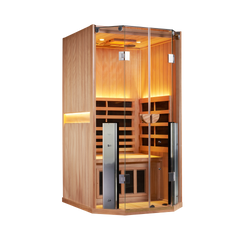
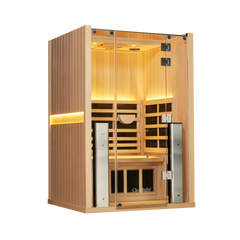
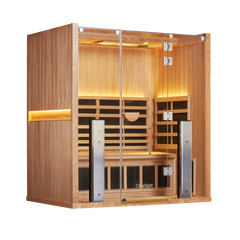
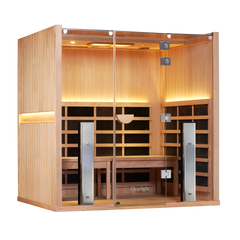
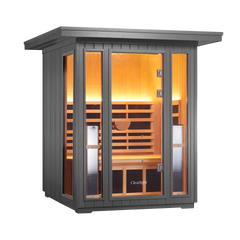
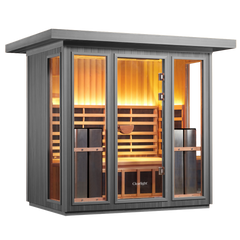
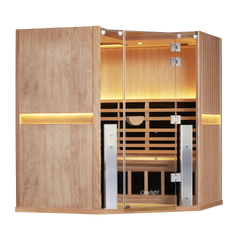
Clearlight® uses broad spectrum infrared technology, combining carbon and ceramic heaters designed to deliver infrared heat across the body.
Infrared Sauna Health Benefits
Infrared sauna is primarily a form of heat therapy. By raising body temperature, it creates a controlled thermal response that affects the cardiovascular, circulatory and thermoregulatory systems.
Supports Circulation
Heat causes blood vessels near the surface of the skin to dilate, increasing blood flow. Heart rate also rises during a sauna session as the cardiovascular system responds to the increase in temperature.
Supports Muscle Recovery
The increase in circulation and tissue temperature associated with sauna use may help support recovery following physical activity. Heat can also help muscles feel more relaxed, making sauna a popular addition to post exercise recovery routines.
Promotes Sweating
Sweating is one of the most noticeable effects of sauna. As body temperature rises, the body's natural cooling system is activated and sweat production increases.
Sweating itself is not a measure of how effective a sauna session is. The amount someone sweats can vary considerably depending on temperature, hydration, session length and individual physiology.
Supports Relaxation and Sleep
Sauna can also form part of a wind down routine. The combination of heat exposure and the body's subsequent cooling response may support relaxation and sleep quality.
Supports Cardiovascular Health
Sauna bathing has been widely studied for its cardiovascular effects. Research has observed changes in heart rate, circulation and vascular function, while observational studies have found associations between regular sauna use and cardiovascular outcomes.
A systematic review and meta analysis of infrared sauna studies in people with heart failure found short term improvements in some measures of cardiac function, although the authors rated the overall evidence from moderate to insufficient and called for further research.
It is important to distinguish these findings from evidence that sauna prevents or treats cardiovascular disease. Research in this area is promising, but sauna should complement rather than replace appropriate medical care.
What Is Red Light Therapy?
Red light therapy is different from infrared sauna therapy.
Also known as photobiomodulation, red light therapy uses specific wavelengths of red and near infrared light rather than heat as its primary mechanism.
Common wavelengths used in photobiomodulation include red light around 630–660 nm and near infrared light around 810–850 nm.
These wavelengths can interact with biological tissue and are being studied for their effects on cellular signalling and mitochondrial function.
The mitochondria are responsible for producing much of the energy used by our cells. Research suggests that certain wavelengths of red and near infrared light may influence mitochondrial activity and ATP production, which has led to growing research into photobiomodulation and areas such as skin health, exercise recovery and tissue repair.
Red Light Therapy Health Benefits
Supports Cellular Energy Production
One of the most studied mechanisms of photobiomodulation involves the mitochondria. Certain wavelengths of red and near infrared light may interact with mitochondrial components and influence cellular energy production.
This is an area of active research, with studies exploring how photobiomodulation may affect ATP production, cellular signalling and oxidative stress.
Supports Skin Health
Red light therapy has been studied extensively in dermatology and aesthetics. Research suggests it may support collagen production and other processes involved in skin repair, making it an area of interest for skin texture, elasticity and general skin health.
Supports Exercise Recovery
Photobiomodulation is also being investigated in sports and exercise science.
A systematic review found evidence that phototherapy may help reduce exercise related muscle fatigue and support post exercise recovery, although outcomes depend on factors such as wavelength, dose, treatment timing and the type of device used.
A later systematic review and meta analysis found low to moderate certainty evidence that photobiomodulation may reduce some forms of oxidative damage following exercise.
Supports Tissue Repair
Red and near infrared light have also been studied for their potential effects on cellular signalling, inflammation and tissue repair.
This is an expanding area of research, with photobiomodulation being investigated across wound healing, rehabilitation and recovery.
As with exercise recovery, results can vary significantly depending on the wavelength, intensity, treatment area and exposure time.
Infrared vs Red Light Therapy: What's the Difference?
While the two therapies are often grouped together, they work through fundamentally different mechanisms.
Infrared sauna is primarily a heat therapy.
Infrared energy is absorbed by the body and converted into heat, producing a whole body thermal response.
Red light therapy is primarily a light therapy.
Specific wavelengths of red and near infrared light are delivered to the body to interact with cells and influence biological processes without relying on significant heating.
In simple terms:
Infrared sauna → heat and whole body thermal response
Red light therapy → light and cellular photobiomodulation
They are different technologies, but their distinct mechanisms mean they can also complement one another.
Why Combine Infrared Sauna and Red Light Therapy?
Combining different wellness modalities is sometimes referred to as "stacking". The idea is to use therapies with different mechanisms within the same routine.
An infrared sauna provides whole body heat exposure, while red and near infrared light provide targeted photobiomodulation.
Clearlight®'s Red Light Tower is designed to be used inside a Clearlight® infrared sauna, allowing both therapies to be incorporated into one session.
Rather than viewing infrared and red light as competing technologies, they can be considered complementary approaches: one creates a controlled thermal response, while the other delivers specific wavelengths of light to the body.
Making Light Therapy Part of Your Routine
The benefits of light therapy are not about exposure to as much light as possible.
Wavelength, intensity, distance and duration all influence the response, which is why following the recommended protocol for a specific device is important.
The same applies to infrared sauna. Start with a comfortable temperature and session length, stay hydrated and gradually build your tolerance to heat.
As with any wellness practice, consistency is more useful than extreme protocols.
The Takeaway
Light is not simply something we use to see. Different wavelengths can interact with the body in remarkably different ways, from creating a whole body thermal response to influencing cellular processes.
Infrared sauna and red light therapy offer two distinct approaches, with growing research into how each may support recovery, performance, skin health and overall wellbeing.
The science is still developing, but the distinction is clear: infrared sauna works primarily through heat, while red light therapy uses specific wavelengths of light to influence cellular processes.
For those interested in incorporating both into their routine, Clearlight® brings the two technologies together through its infrared sauna and Red Light Tower.